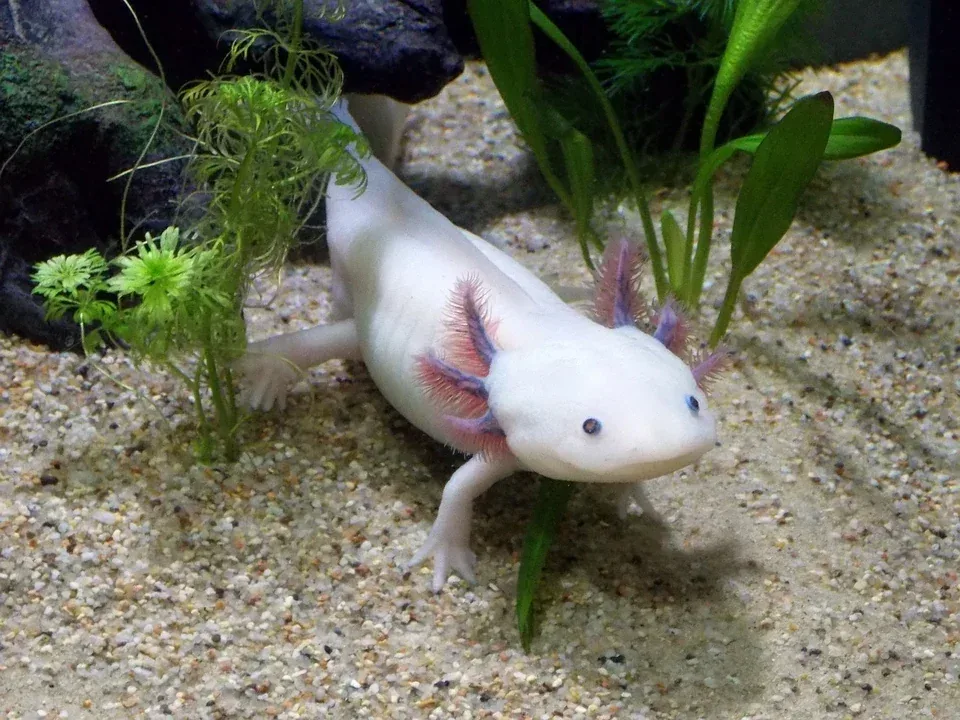
The axolotl is a salamander native to the lake system around Mexico City and is known for retaining larval features into adulthood. Its biology has made it important in laboratory research, but captive animals do not substitute for a functioning wild habitat. A conservation story should distinguish the species' scientific use from the condition of its native waterways.
Urbanisation, water quality changes, invasive fish, and habitat modification have affected the Xochimilco canal system. Conservation initiatives include habitat restoration and community-managed refuges, but outcomes must be evaluated with repeated wild-population monitoring. Check the current IUCN assessment and local project reports before quoting a trend or a population number.
A salamander famous for regeneration and a shrinking wild home
The axolotl is a salamander native to the lake and canal system around Xochimilco in Mexico City. It is well known for retaining larval features into adulthood and for its capacity to regenerate some tissues, which has made it an important laboratory model. That scientific attention can distract from the condition of the animal's wild habitat. Captive axolotls are not evidence that a functioning wild population remains secure. A conservation account should keep laboratory biology, managed breeding, and wetland ecology separate while explaining how they relate.
Xochimilco is a living water landscape
The remaining wetland includes canals, chinampas, aquatic vegetation, and human-managed water systems. Water quality, flow, vegetation, and invasive species influence whether the habitat can support axolotls and other native organisms. Urban growth and changes in land use have reduced and fragmented suitable habitat. A map of canals does not show whether water is clean, connected, or biologically usable. Field studies and local monitoring are needed to track those conditions. Because the wetland is also part of a living city, conservation measures need to work alongside local farming, transport, and cultural practices.
Laboratory prominence is not a conservation shortcut
Axolotls are studied in developmental and regenerative biology, and laboratory colonies allow researchers to investigate questions that are difficult to study in the wild. This role should not be confused with a conservation plan for Xochimilco. Captive populations need genetic and health management, while wild recovery depends on water quality, habitat structure, and survival under natural conditions. An article that begins with the laboratory should make this distinction explicit. It can explain why the species attracts scientific interest without suggesting that biomedical value automatically directs funding or improves the wetland.
Refuges test a landscape-scale approach
Some conservation work in Xochimilco has focused on creating or managing refuges within canals, improving conditions and reducing access by invasive predators. A refuge is a practical intervention, but it needs monitoring to determine whether water quality, prey, survival, and reproduction respond. An area that excludes an invasive fish may still face pollution or low oxygen. Research from UNAM and other institutions can help evaluate the design, while local farmers and canal users have knowledge about water movement and maintenance. Projects should report their methods and results rather than treating the word 'refuge' as proof of recovery.
Water quality is a shared responsibility
Pollution entering a canal can come from multiple sources, and its effects can build over time. Monitoring may measure nutrients, contaminants, temperature, oxygen, and biological indicators. A single sample gives only a snapshot, while seasonal records show how conditions change. The response may require wastewater infrastructure, agricultural practices, habitat management, and enforcement. Conservation groups cannot fix water quality alone if upstream inputs continue. Public communication should identify the measured pollutant and its source where known, and avoid implying that every canal has identical conditions.
Community participation should shape restoration
Chinampa farmers and other local residents are part of the Xochimilco landscape. Conservation plans that restrict access or alter water management can affect livelihoods, so community participation matters from design through evaluation. A 2023 UNAM doctoral thesis examined the axolotl as a flagship species for wetland conservation, reflecting the connection between a species-focused effort and the wider habitat. That framing can help attract attention, but the benefits should be assessed for both biodiversity and local people. Good reporting explains who took part, what changed, and how outcomes were measured.
Measure recovery in the wild
A conservation programme should track evidence that relates to wild survival: repeated detections, reproductive signs, habitat condition, and threats such as invasive species. Release numbers alone are not enough. Researchers also need biosecurity and disease protocols if animals are moved, and sensitive locations should be protected. The current IUCN assessment should be consulted for a dated global status; local studies are necessary for conditions in Xochimilco. Axolotl conservation is strongest when public fascination with regeneration is redirected toward the less visible work of protecting a wetland and monitoring the animals that still live there.
Axolotl research is often discussed through limb regeneration, but the conservation question is about a species and its habitat, not just a laboratory trait. Captive stocks can support research and education, yet they do not maintain the ecological relationships of wild Xochimilco populations.
Water quality measurements, invasive fish control, refuge management, and community participation are parts of local restoration work. Results should be reported with dates and locations because canal conditions differ. Avoid quoting dramatic wild-population totals unless a current survey and its method are cited.