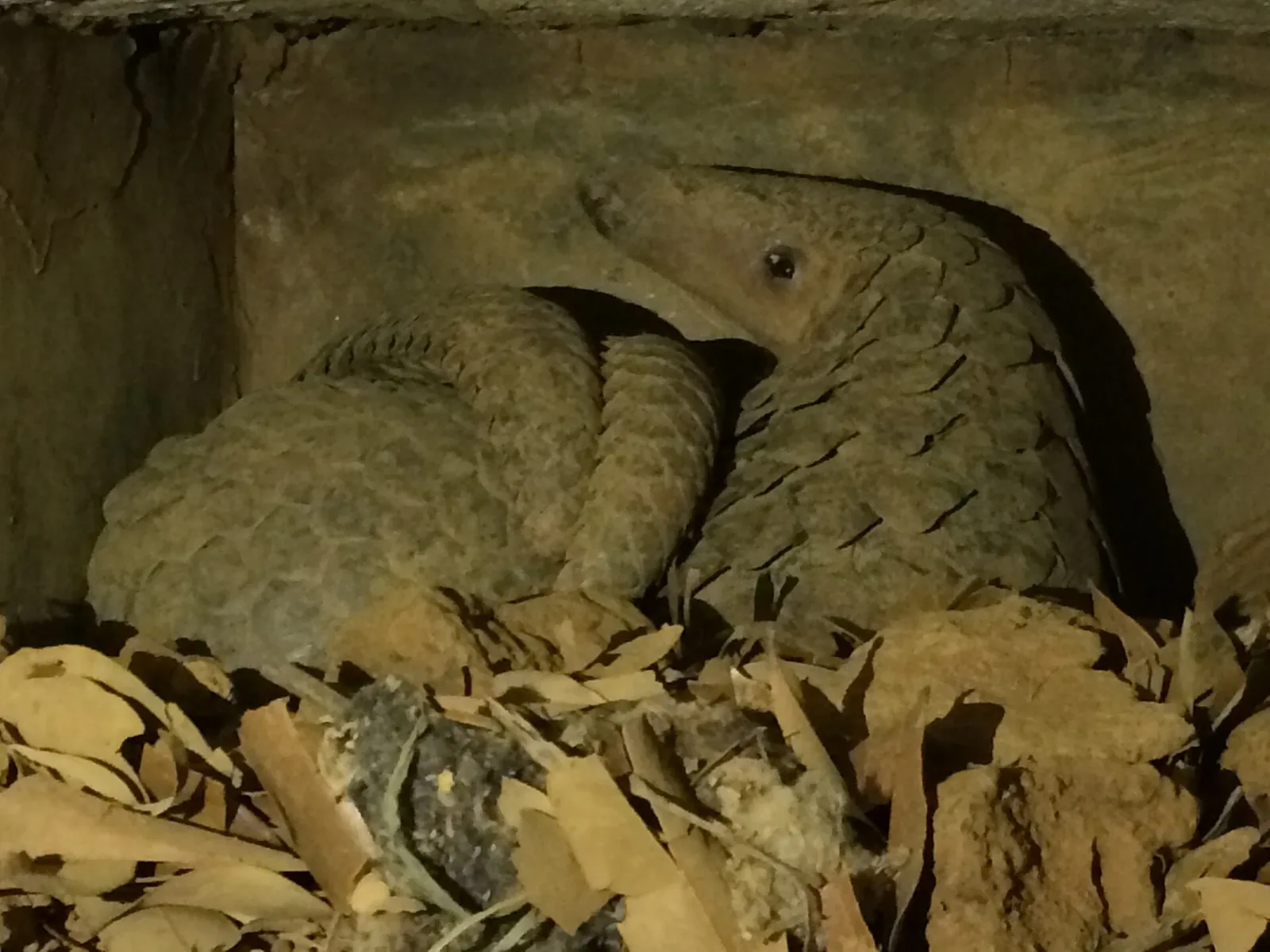
Pangolins are mammals with keratin scales, and all eight living species are protected under CITES Appendix I. Their nocturnal, often solitary habits make them difficult to survey, while illegal trade has made trafficking a major conservation concern. That combination means public claims about abundance should be treated cautiously unless they identify a species, location, date, and survey method.
The most helpful response to an encounter is distance and non-interference. Do not handle, feed, or publish precise location details that could expose an animal to collection. CITES trade rules address international commerce; they do not replace local protection or habitat measures. Pangolin conservation also requires demand reduction and enforcement informed by the routes and markets documented by authorities.
Scales are a specialised tool, not armour against every threat
Pangolins are mammals covered in keratin scales, the same structural material found in hair and nails. When threatened, many curl into a tight ball, a defense that can deter some predators but offers little protection against people who can pick up the animal. The eight living species occupy parts of Africa and Asia and differ in size, range, and ecology. Treating them as one interchangeable animal obscures those differences. A conservation account should identify the species and region whenever possible, especially because trade routes, habitat conditions, and enforcement needs vary between countries.
An insect diet links pangolins to the forest floor
Pangolins feed mainly on ants and termites, locating nests with a strong sense of smell and opening them with powerful claws. Their long, sticky tongues help collect prey from narrow galleries. This feeding strategy makes them difficult to keep in ordinary captive settings and ties their daily lives to the distribution of insect colonies. It also means that a photograph of a pangolin on open ground says little about the habitat conditions it needs. Forest structure, soil, and the availability of prey matter, and the same species may use a mosaic of habitats rather than one simple vegetation type.
Why international trade became central
Pangolins have been heavily affected by illegal hunting and trafficking for scales and meat. CITES regulates international trade in listed species, and all pangolin species were moved to Appendix I in 2016, which prohibits commercial international trade in wild-caught specimens subject to the Convention's rules and exceptions. That legal framework is important, but it does not mean every domestic market or illegal shipment has disappeared. Enforcement data, seizures, investigations, and demand reduction all reveal different parts of a hidden trade. Seizure totals should not be mistaken for a complete measure of how many animals are killed.
Local pressures are not the same everywhere
Habitat conversion, infrastructure, and land-use change can reduce access to suitable feeding and resting areas. In some landscapes, pangolins may also encounter farms or settlements, where they are vulnerable to capture. The balance between hunting pressure and habitat loss differs among species and locations. This is why broad statements such as 'pangolins are disappearing because of deforestation' are incomplete. Conservation assessments should distinguish direct exploitation from landscape change and explain whether evidence comes from field surveys, trade records, or interviews. Each dataset has blind spots, and combining them helps reveal where protection is most urgently needed.
A difficult animal to monitor
Pangolins are generally elusive and often active at night, making population estimates challenging. Camera traps can record activity, but detection rates depend on placement and habitat; burrows and feeding signs can offer clues but may be hard to assign to a species or individual. Genetic sampling may help in some settings, though it requires appropriate permissions and careful protocols. Researchers need to report how effort was measured and avoid treating more photographs as direct proof of a population increase. Long-term studies that revisit the same areas can help separate genuine change from a shift in survey coverage.
Rescue and release need more than good intentions
Confiscated pangolins may need specialised veterinary care, quiet holding conditions, and a release decision based on health and origin. Releasing an animal where it was found may be impossible if the site has been destroyed or if a criminal investigation requires evidence. A translocation can also carry disease and ecological risks. Rescue organisations should explain how they determine readiness, select a site, monitor survival, and protect sensitive location data. Publicity can support conservation, but close-up handling images may encourage unsafe imitation or expose animals to additional demand. Ethical communication treats privacy and welfare as part of the intervention.
What readers can verify
CITES documents and national wildlife agencies can explain the legal controls that apply to trade, while species assessments and field studies address ecology and risk. A useful report names the species, country, date, and type of evidence behind each claim. It distinguishes a verified trafficking case from an estimate of total trade and separates an individual rescue from evidence of recovery. The practical conservation picture is demanding but not mysterious: protect habitat, reduce poaching and demand, support trained local teams, and publish data that others can evaluate. No single image or seizure count can stand in for that wider record.
Seizure records reveal only detected trafficking, so increases or decreases can reflect enforcement effort as well as underlying trade. CITES listings help establish international legal controls, while national agencies and conservation groups document rescue, rehabilitation, and trafficking routes. Those sources answer related but different questions.