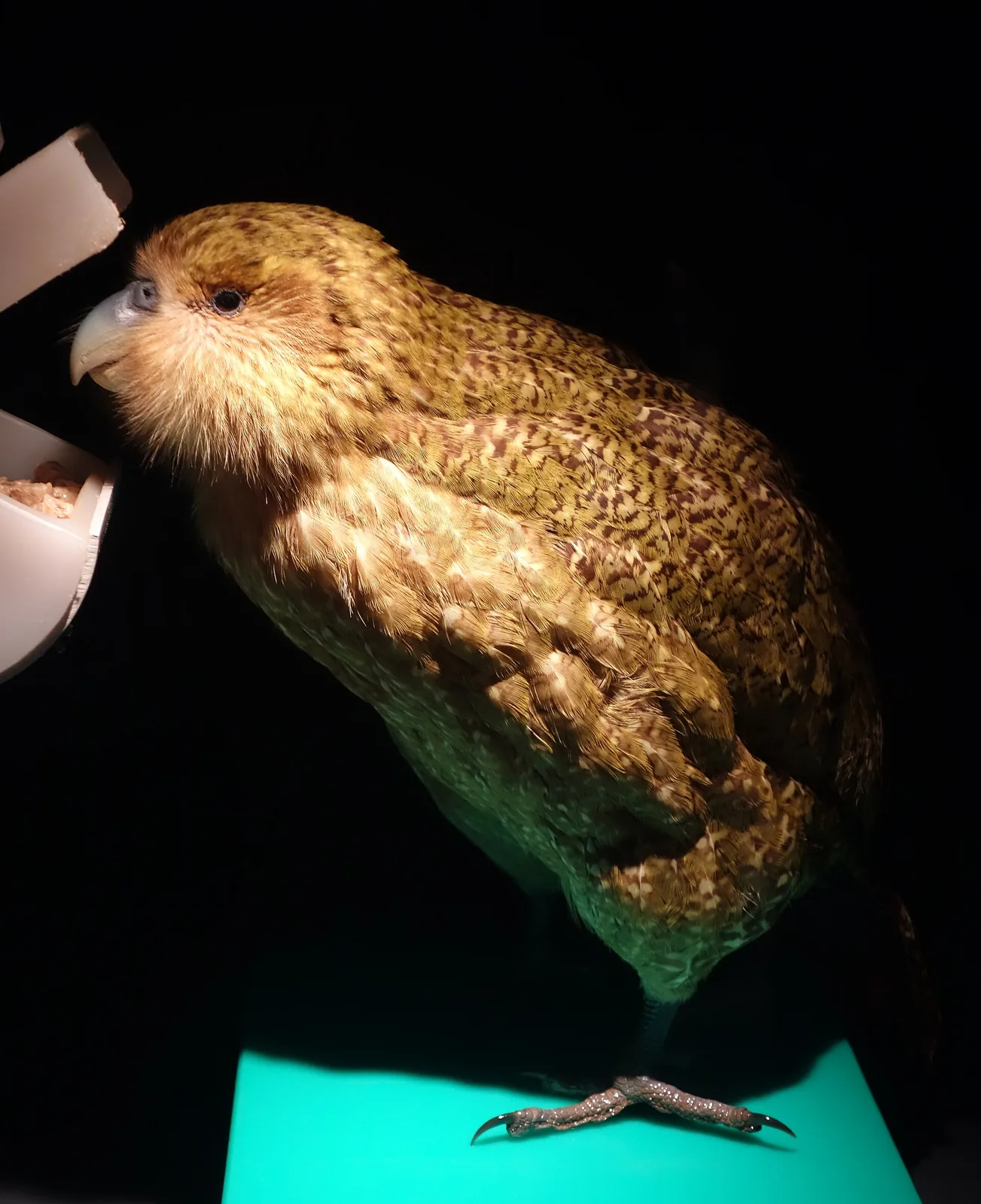
Kākāpō recovery shows both what intensive conservation can achieve and why a rising head count is not the whole measure of recovery. New Zealand's Department of Conservation and Ngāi Tahu reported 325 birds on 1 September 2026 after 90 chicks from the 2026 breeding season reached the programme's independence milestone. Those figures are dated programme counts, not a global wildlife census.
Kākāpō breed irregularly in response to rimu mass-fruiting and are managed on predator-free islands with radio transmitters and close nest monitoring. The recovery programme is also testing ways to reduce intervention where safe. Long-term success means populations that can persist across suitable habitat with less intensive handling, while respecting the species' status as a taonga for Ngāi Tahu.
A parrot whose life history sets the timetable
The kākāpō is a large, flightless, nocturnal parrot endemic to New Zealand. Its breeding is episodic rather than annual: reproduction is associated with heavy fruiting of rimu trees, and the Department of Conservation reports that breeding may occur only every few years. That rhythm means a quiet year is not automatically evidence of a failed recovery, while a busy breeding season does not by itself demonstrate long-term security. Population management must account for the bird's life cycle, survival, reproduction, and the condition of the islands where the remaining birds are managed.
Intensive care depends on individual records
The Kākāpō Recovery Programme tracks birds with radio transmitters and maintains detailed life histories. During breeding seasons, teams monitor nests, chicks, and the health of adults; supplementary feeding is used to support breeding condition and chick rearing. These interventions can be highly intensive, but they are not interchangeable. Tracking locates birds, nest kits help monitor breeding, and health checks provide information about individual condition. A report should describe which practice produced a given result. Keeping individual records also allows conservation managers to notice patterns that would disappear in a single island-wide total.
Rimu fruit links forest ecology to reproduction
Rimu mast events help explain why the parrot's breeding schedule is tied to forest phenology. When food availability changes, reproductive opportunity changes with it. Managers can supplement diets, but they also study how food affects breeding outcomes and the balance of chicks produced. This is a complex intervention: more food is not automatically better if it shifts sex ratios or affects health. The programme's research notes the need to tune feeding to specific goals. The broader lesson is that species recovery plans should understand the ecological cue that triggers reproduction rather than simply increasing inputs whenever reproduction is low.
Island refuges require ongoing biosecurity
Moving threatened birds to predator-managed islands can reduce exposure to introduced mammals, but an island is not self-protecting. Biosecurity, habitat maintenance, disease precautions, and careful visitor protocols all remain important. An accidental introduction of a predator could reverse years of work. Staff and volunteers therefore need clear procedures for equipment, supplies, and movement between sites. Public accounts often focus on the dramatic act of relocating an animal; the unglamorous routines that keep a refuge safe are equally important. Long-term records should state how these risks are managed and reviewed.
Cultural partnership is part of the programme
The Department of Conservation works with Ngāi Tahu in the kākāpō recovery programme. The relationship matters because the species is a taonga and conservation decisions involve cultural responsibilities as well as biological targets. Describing a programme only as a technical intervention would leave out an important part of how it operates. Partnership should be represented accurately and specifically, without claiming to speak for iwi or reducing cultural stewardship to a public-relations detail. Where sources describe joint work, readers can follow those records to understand how governance, knowledge, and conservation practice meet.
Technology helps, but people interpret the signals
Transmitters, automated tracking stations, nest sensors, and data systems can reduce the time needed to locate birds and detect changes. Technology can also fail: batteries expire, devices break, and a signal may be lost. The DOC technology resource describes how monitoring equipment supports the work and documents past equipment problems. This makes maintenance and contingency planning part of conservation science. A sensor is not an answer by itself; staff still need to interpret the data, check unusual readings, and decide whether an intervention is appropriate. Public summaries should communicate these practical limits.
Recovery is a process, not a single milestone
A new population high is worth reporting, but the meaning depends on whether enough adults are breeding, chicks survive, and the species remains resilient to disease and poor fruiting years. The 2026 breeding-season announcement is a dated update, not a timeless estimate. Readers should check the programme's current census and note the date before repeating a total. A useful long-term measure also asks how much intervention would be needed if resources changed. Kākāpō recovery shows what sustained, coordinated management can accomplish, while reminding us that a critically threatened species may remain dependent on close stewardship.
The 2026 result is a programme milestone with a clearly stated counting rule: chicks are added after reaching 150 days. That makes the figure useful when compared with the programme's own past records, but not directly comparable with counts that include younger chicks or use a different date.