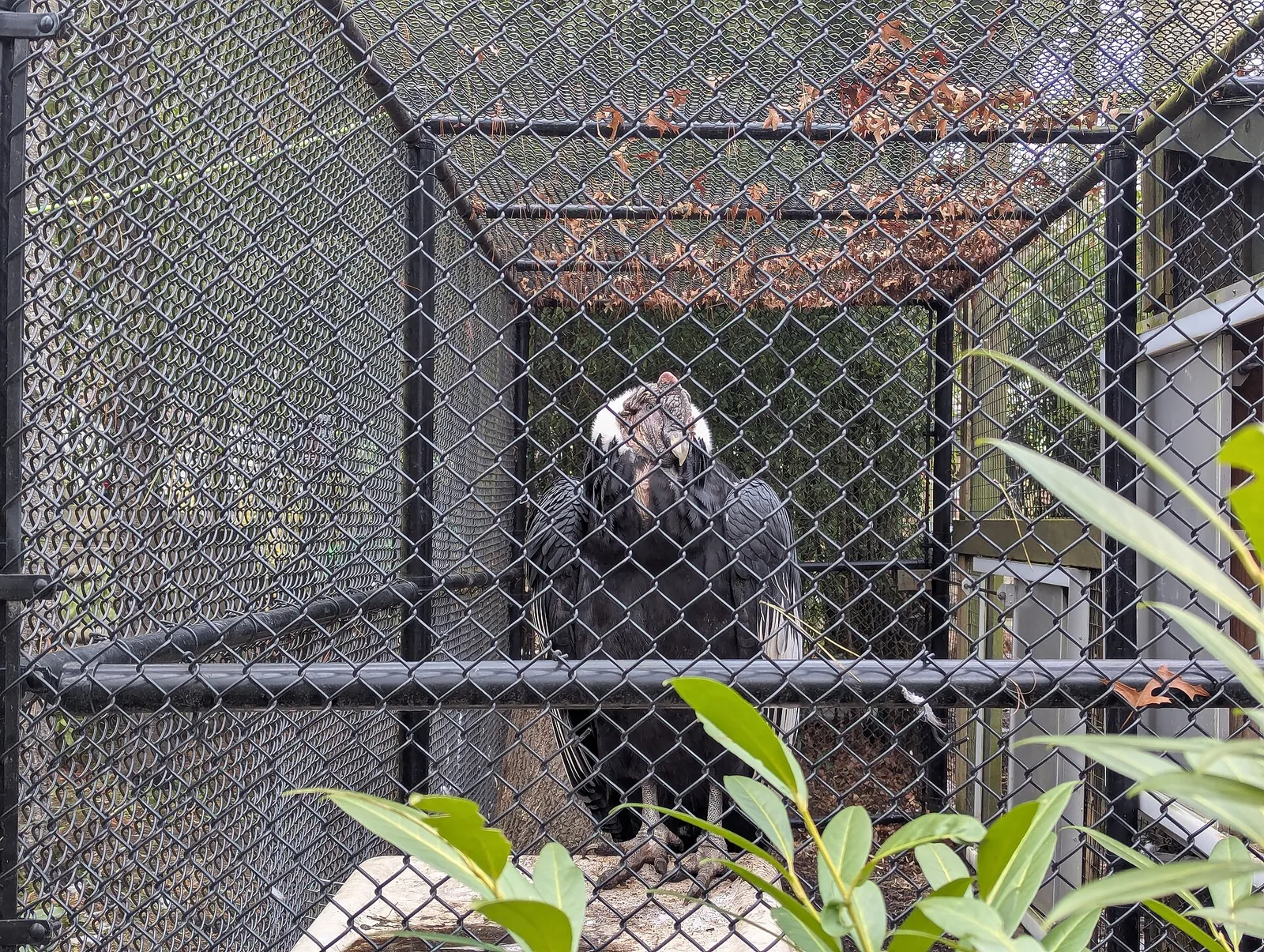
Andean condors are scavenging birds whose ecology links them to large landscapes and the availability of carrion. Their slow reproductive pace means that changes in adult survival can matter strongly to population prospects. A dramatic view of a soaring bird is not a colony census: monitoring needs repeatable counts, age information where feasible, and clear methods for avoiding double-counting individuals.
Threats and management vary among countries and sites, so a single regional narrative should not be treated as a range-wide status update. Conservation work can include protecting nesting and roosting areas, reducing poisoning risk, and working with livestock owners. Consult the current Red List assessment for the global category and its assessment year before repeating a status label.
A soaring bird is easy to notice and hard to count
The Andean condor's size and broad soaring flight make it conspicuous, but conspicuousness does not make its population easy to estimate. A bird seen crossing a ridge may have travelled a long distance, and the same individual can be recorded by observers in more than one place. Counts at roosts, nest monitoring, tagged-bird movement, and opportunistic sightings each describe different parts of the population. Before comparing numbers, a report needs to say what was counted, where, when, and whether observers could distinguish individuals. Otherwise an apparent increase may simply reflect more people looking.
Scavenging connects the condor to a wider food web
As a large scavenger, the condor uses carrion and participates in the movement of nutrients through mountain and coastal landscapes. Its foraging range may cross habitat types and administrative boundaries, so a local nesting cliff cannot be treated as the whole conservation unit. Food availability can depend on wild herbivores, livestock practices, and carcass management. Human-provided food, when part of a managed conservation programme, should not be confused with natural foraging conditions. Researchers need to describe how feeding sites are monitored and whether changes in behavior or health are evaluated rather than assuming that additional food always produces a benefit.
Nest sites reveal a different slice of the picture
Cliff ledges and remote rocky slopes can provide nest sites, but observing a nest carries a disturbance risk. Repeated close visits may affect adults or chicks, especially during sensitive stages. A monitoring protocol can use distant vantage points, limited visit schedules, or remote cameras where permitted. It should record effort and failures as well as successful fledging. A nest count is not the same as a total population estimate: non-breeding birds, juveniles, and animals outside surveyed sites may be missed. Clear reporting prevents one promising colony from standing in for the species across the Andes.
Poisoning changes the meaning of a carcass
Poisoned baits can kill scavengers that feed on a contaminated carcass, sometimes affecting several species at once. The risk can be difficult to detect because a dead bird may be found far from where poison was placed, and not every mortality receives a toxicology test. A credible account distinguishes confirmed poisoning from suspected cause of death and states the evidence available. Conservation responses may include safer livestock-loss prevention, rapid reporting, and coordination with veterinary and wildlife authorities. Broad claims about the prevalence of poisoning should be tied to a defined region and monitoring period.
Movement data can expose hidden barriers
Satellite tags or GPS transmitters can show how individual condors move between feeding areas, roosts, and colonies. These data can identify places where birds repeatedly encounter power infrastructure or cross heavily used landscapes. Yet tagged individuals may not represent every age, sex, or subpopulation, and a map of tracks does not automatically reveal a cause for mortality. Researchers should publish the number of tagged birds, observation dates, equipment limits, and any data gaps. When sensitive sites are involved, locations can be generalised to reduce disturbance while preserving the information needed for conservation planning.
Threats need local evidence
Habitat change, poisoning, conflict, disturbance, and infrastructure can affect condors differently from one region to another. A threat list is a starting point, not an explanation of what is happening at a particular colony. Interviews with communities can help identify conflict contexts, but they should be treated as evidence with consent and safeguards, not as anecdotal proof of population decline. Mortality investigations, nesting data, and repeat surveys can reveal which pressures are most urgent. The Andean range spans multiple countries, so a conservation plan also needs local laws and institutions rather than one generic regional recommendation.
A monitoring plan that can be repeated
Useful monitoring begins with a question: Are nesting pairs changing, are juveniles reaching independence, or are birds using a threatened corridor? The answer determines the survey method and the interval between surveys. Standardised observation forms, training, photo identification where possible, and transparent treatment of uncertain records improve consistency. Citizen observations can expand coverage when experienced reviewers check records and sensitive locations are protected. The central lesson is that the condor's dramatic appearance should not lead to dramatic but unsupported claims. Strong conclusions come from repeated, complementary evidence and a clear account of what remains unknown.
Because condors reproduce slowly, conservation programmes often focus on survival as well as recruitment. Lead exposure, poisoning, food availability, and disturbance around nest sites may affect different parts of the life cycle. A population trend should therefore be interpreted alongside the threats measured at that particular site.