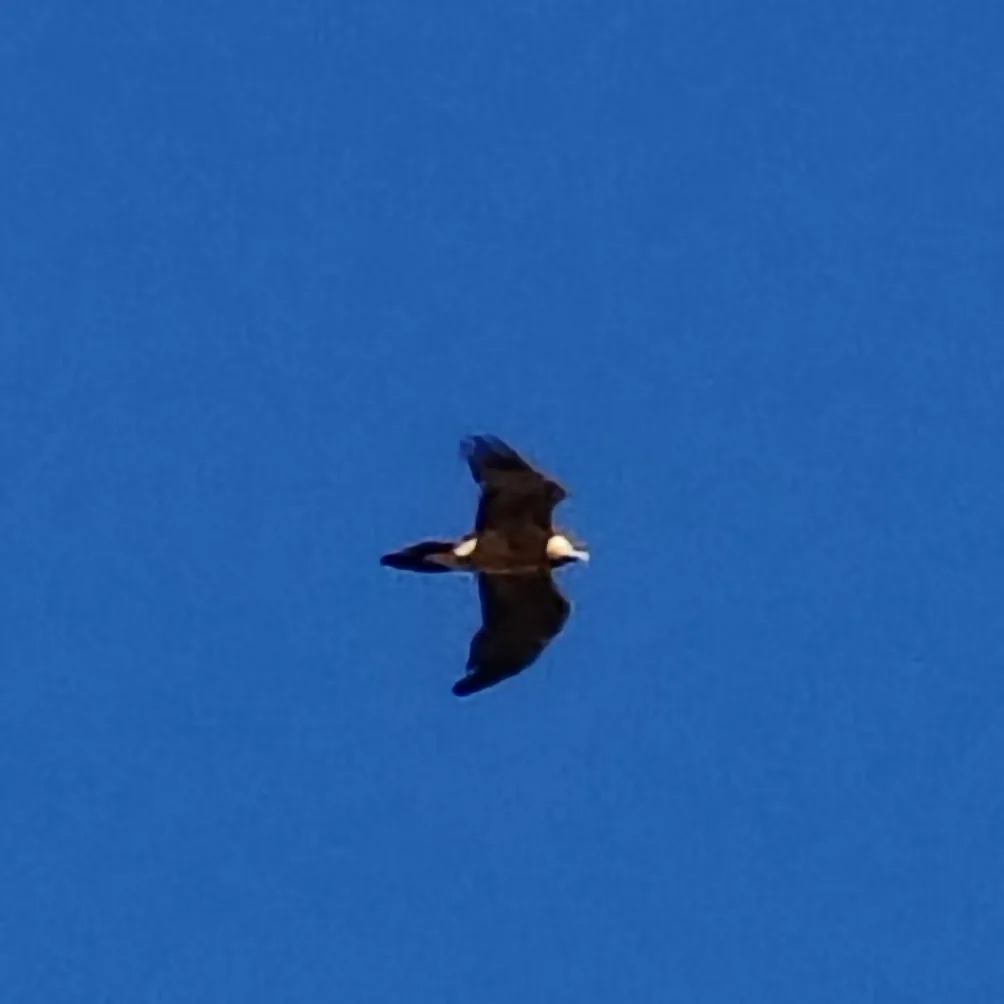
The bearded vulture, or lammergeier, is a large Old World vulture specialised in feeding on bones. European recovery programmes have used captive breeding and releases to re-establish populations in parts of the Alps, but a released bird, a breeding pair, and a self-sustaining population are different milestones.
A credible recovery account states which mountain range, project, period, and measure it describes. Monitoring of territory occupancy, breeding success, survival, and genetic management can reveal whether reintroductions are producing a durable population. Avoid turning a single nesting report into a claim that the species has returned across the entire Alpine arc.
A vulture that nests on high cliffs
The bearded vulture is a large scavenging bird associated with mountain landscapes across parts of Europe, Africa, and Asia. In the Alps, conservation programmes have worked to restore the population after historic declines. Its flight and specialized feeding ecology connect distant ridges, feeding areas, and nesting sites. A cliff nest is a small visible part of a much broader range. Monitoring should therefore include both breeding territories and movements beyond them. The Vulture Conservation Foundation's international monitoring network coordinates information across countries, helping researchers and managers understand a population that crosses administrative boundaries.
Bones reveal a distinctive feeding strategy
The bearded vulture is known for consuming bones and dropping larger pieces from height to break them. This behavior allows it to use a food resource that many scavengers cannot access as easily. It is part of a wider scavenger community in which different species use different parts of a carcass. The exact diet and feeding behavior vary with season and food availability. Observers should avoid assuming that every bird seen near carrion is competing for the same resource. A useful account connects the species' feeding adaptation to mountain ecology and the availability of safe food across a landscape.
Reintroduction is monitored across generations
The Alpine population recovery involved reintroduction efforts that began decades ago and continued through coordinated release and monitoring. A release is an input; the longer-term questions are whether birds survive, form pairs, breed, and disperse. The monitoring network shares data on known birds and breeding activity across participating regions. Because the population moves, a country-by-country count may not describe the whole story. Public updates should name the reporting year and distinguish confirmed breeding pairs from total individuals. The monitoring network's latest reports are the right place to verify current figures before publication.
Poison and infrastructure remain concerns
Vultures can be exposed to toxic substances in carcasses, including lead from ammunition or poisons intended for other animals. Power infrastructure and disturbance at nesting sites may create additional risks. The impact varies by region and should be supported by mortality records or targeted studies. Conservation teams can work with land managers, hunters, and energy operators on prevention, but claims about a particular threat need local evidence. A general list of dangers is not an explanation of what is limiting one Alpine subpopulation. Monitoring helps direct action toward the most important pressures.
Nesting observations should stay distant
A repeated visit to a cliff nest can disturb adult birds, especially during incubation or chick rearing. Researchers use vantage points, permits, and scheduled observations to minimize disruption. Recreational observers should follow reserve rules and avoid sharing precise nest coordinates. Supplementary feeding, where used, belongs within a managed programme with monitoring and clear protocols; visitors should never leave food to attract birds. A successful nest count is meaningful only when the method protects the birds and can be compared over time. Ethical observation keeps the data and the animals safer.
International coordination makes the map useful
The International Bearded Vulture Monitoring Network brings together national parks and conservation organisations to monitor birds across Europe. This matters because an individual may move between countries and be recorded by multiple teams. Shared identification, reporting, and data standards reduce duplicate counts and improve understanding of dispersal. A network can also help locate gaps in coverage. Its value depends on regular participation and transparent methods. The Alpine example shows why cross-border collaboration is not simply diplomatic language; it is part of how an ecological population is measured and managed.
Recovery is not the end of conservation
A population may grow and still remain vulnerable to sudden mortality, habitat change, or disruption of breeding sites. Recovery indicators should include survival, reproduction, range, and threat trends, with dates and uncertainty. The Vulture Conservation Foundation's maps and annual reports provide current context for monitored birds, while local agencies manage site-specific issues. Readers should resist turning a positive population update into a claim that the species is secure everywhere. The useful lesson is that long-term recovery depends on patient monitoring, safe habitat, and cooperation among people who share the mountain range.
The bearded vulture's bone-based feeding behaviour can influence how it uses cliff habitat and open landscapes. Lead ammunition, poisoning, disturbance, and food availability are among pressures that conservation teams may monitor. The significance of each threat can vary by region and should be checked against current assessments.
Reintroduction projects track captive breeding, release survival, territory establishment, and successful reproduction over years. Those measures help distinguish a temporary presence from a self-sustaining population. Do not interpret a single nest report as proof that the species has recovered throughout its historic range.