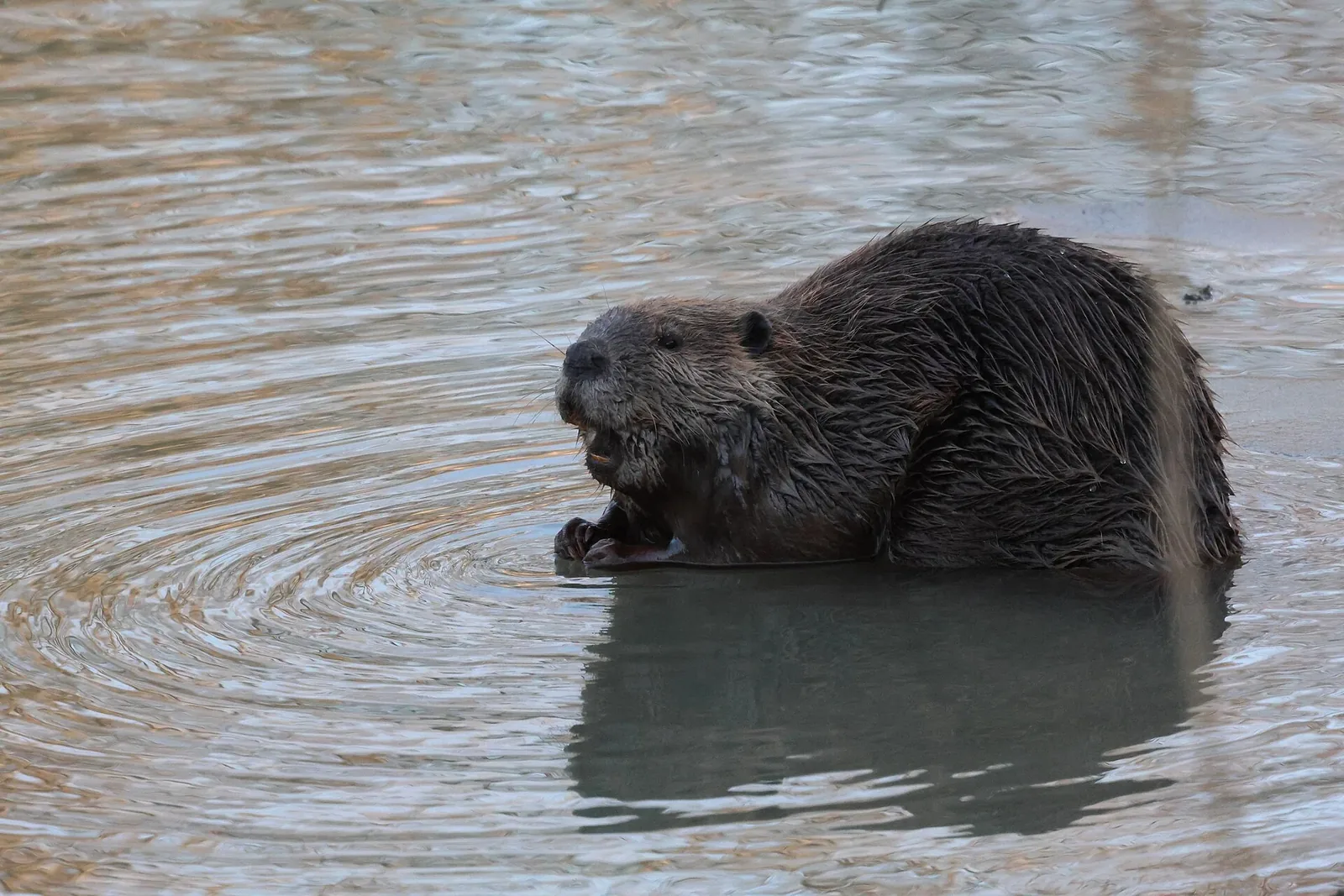
Beavers change waterways by building dams and canals, which can create ponds and wetland habitat and alter how water moves across a catchment. These changes may benefit some species and create challenges for farming, infrastructure, or fish passage in particular locations. Calling beavers ecosystem engineers describes their influence; it does not mean every effect is positive.
England's 2025 policy sets out a licensed approach to wild releases and management, including planning with landowners and a long-term project plan. The River Otter trial provided evidence for one catchment, not a universal prediction. Monitoring should track water, habitat, biodiversity, and effects on people, with support for resolving conflicts.
Beavers change water as they build habitat
Eurasian beavers fell trees and build dams and canals, changing how water moves through a landscape. The resulting ponds and wetlands can create habitat for plants, invertebrates, amphibians, fish, and birds. Beavers are often called ecosystem engineers because their activity alters physical conditions that other organisms use. The effect is not uniformly beneficial in every location: a dam can flood a track, affect a field, or influence drainage. A useful account describes both the ecological processes and the practical management questions rather than presenting beavers as either a universal solution or a universal problem.
Water moves sideways as well as downstream
A dam can slow flow and spread water laterally into a floodplain or wetland, while reducing downstream connectivity in some circumstances. UK government evidence describes beaver dams as increasing surface storage and raising water tables, with medium confidence around flood-risk effects. The outcome depends on catchment size, soil, rainfall, dam condition, and where people and infrastructure are located. A small headwater wetland may respond differently from a heavily managed lowland river. Monitoring should measure water levels and peak flows at named sites rather than treating an observed local effect as a general flood forecast.
Wetland creation can support biodiversity
Beaver ponds and side channels create varied depths, vegetation, and edge habitat. Some species benefit from the new wetland, while others prefer faster-flowing water or open channels. The local ecological result depends on which habitats were present before and how the stream responds. Surveys can track fish passage, invertebrates, vegetation, water quality, and wildlife use. A dam count is not a measure of biodiversity. It is also important to consider whether a structure blocks a species of concern or creates conditions for invasive organisms. Site-specific monitoring reveals these trade-offs better than broad claims about ecosystem benefits.
Coexistence requires a response plan
Beaver activity can affect crops, trees, paths, drainage, and infrastructure. A durable management approach gives landowners a way to report a problem and access practical support before conflict escalates. Measures may include tree protection, flow devices, fencing, or site-specific licensed management. The appropriate response depends on law and ecological context. England's 2025 policy sets out licensing and management objectives and acknowledges concerns from farmers, fisheries, and infrastructure managers. Those rules apply to England and should not be generalized internationally. Readers should consult local authorities for legal requirements and available support.
Reintroduction needs preparation and monitoring
A release proposal should consider suitable habitat, disease, genetics, connectivity, stakeholder views, and how conflicts will be handled. The presence of beavers after release is not enough to judge success. Monitoring can record survival, reproduction, dam effects, water levels, biodiversity, and incidents affecting people. The River Otter Beaver Trial and later policy work provide evidence for England's approach, but results from one catchment may not transfer directly to another. Publishing both benefits and costs helps communities understand what the evidence supports and what remains uncertain.
Flood claims need careful boundaries
Beaver dams can store water and alter flow, but they do not eliminate flood risk. The effect on a flood peak depends on storm size, catchment conditions, the location and number of dams, and whether structures remain intact. In some settings, wetlands can attenuate flow; in others, local water levels may rise or infrastructure may be affected. A modelled benefit should be identified as modelled, and an observed result should include site and event details. Beavers may contribute to natural flood management, but they are one element in a catchment strategy rather than a substitute for engineering or emergency planning.
Plan for the river over time
Beavers alter landscapes gradually, and people may need to adjust management as new dams and ponds form. A catchment plan can identify sensitive infrastructure, priority wetland areas, monitoring responsibilities, and thresholds for intervention. It should include residents and land managers as partners, with a transparent process for reviewing outcomes. Biodiversity should be measured alongside flood and land-use effects. The return of beavers can create opportunities for habitat recovery, but it also asks communities to share space with a powerful ecological engineer. Evidence, practical support, and adaptive management determine whether that coexistence lasts.
Beaver dams can increase local water storage but can also affect drainage, culverts, trees, and agricultural land. These outcomes depend on stream gradient and infrastructure. Monitoring should be designed with people who live and work in the catchment, and include a practical route for addressing conflicts.