Camera traps record animals that may be difficult to observe directly, and can support studies of occupancy, activity, and community composition. The camera is only one part of a study: placement, spacing, operating time, trigger settings, and identification rules influence the data. Counts of photographs are not automatically counts of animals.
Remote cameras can also record people, creating privacy and safety concerns. Researchers should plan how to handle human images, secure data, and meet land access and legal requirements. A clear protocol, metadata, and repeatable sampling design make the resulting evidence more useful than an impressive collection of wildlife clips.
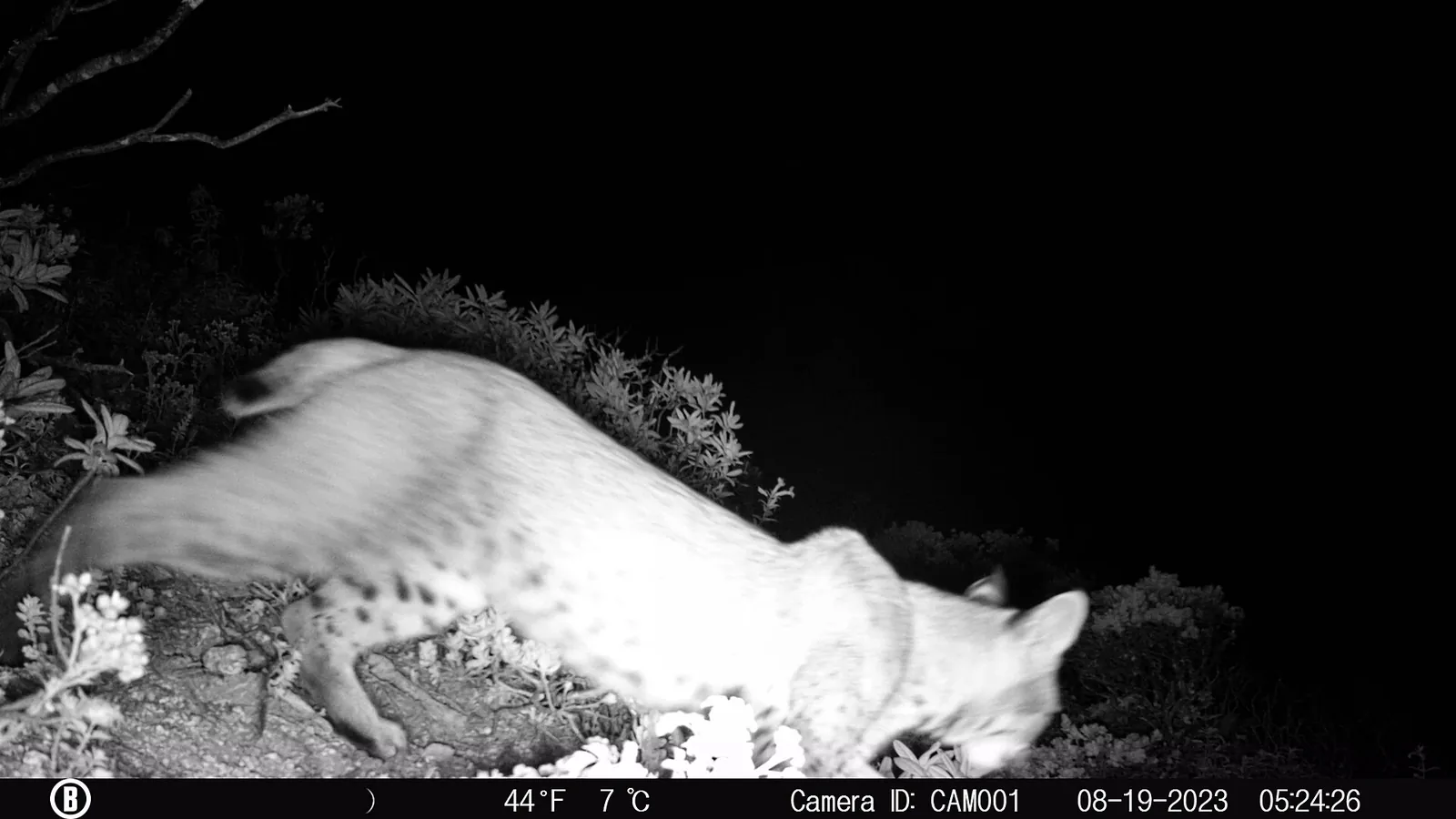
A camera trap records an encounter at a place and time
Camera traps allow researchers to observe wildlife without a person remaining beside the camera. They can record presence, activity, and behavior across day and night, and they are especially useful where animals are elusive. But one image is a detection, not a population estimate. Whether an animal appears depends on camera location, settings, weather, vegetation, and how long the equipment works. A report should begin with the question being asked and explain how the sampling design relates to it. The technology is powerful because it can be repeated, not because it removes the need for ecological reasoning.
Placement changes what the camera sees
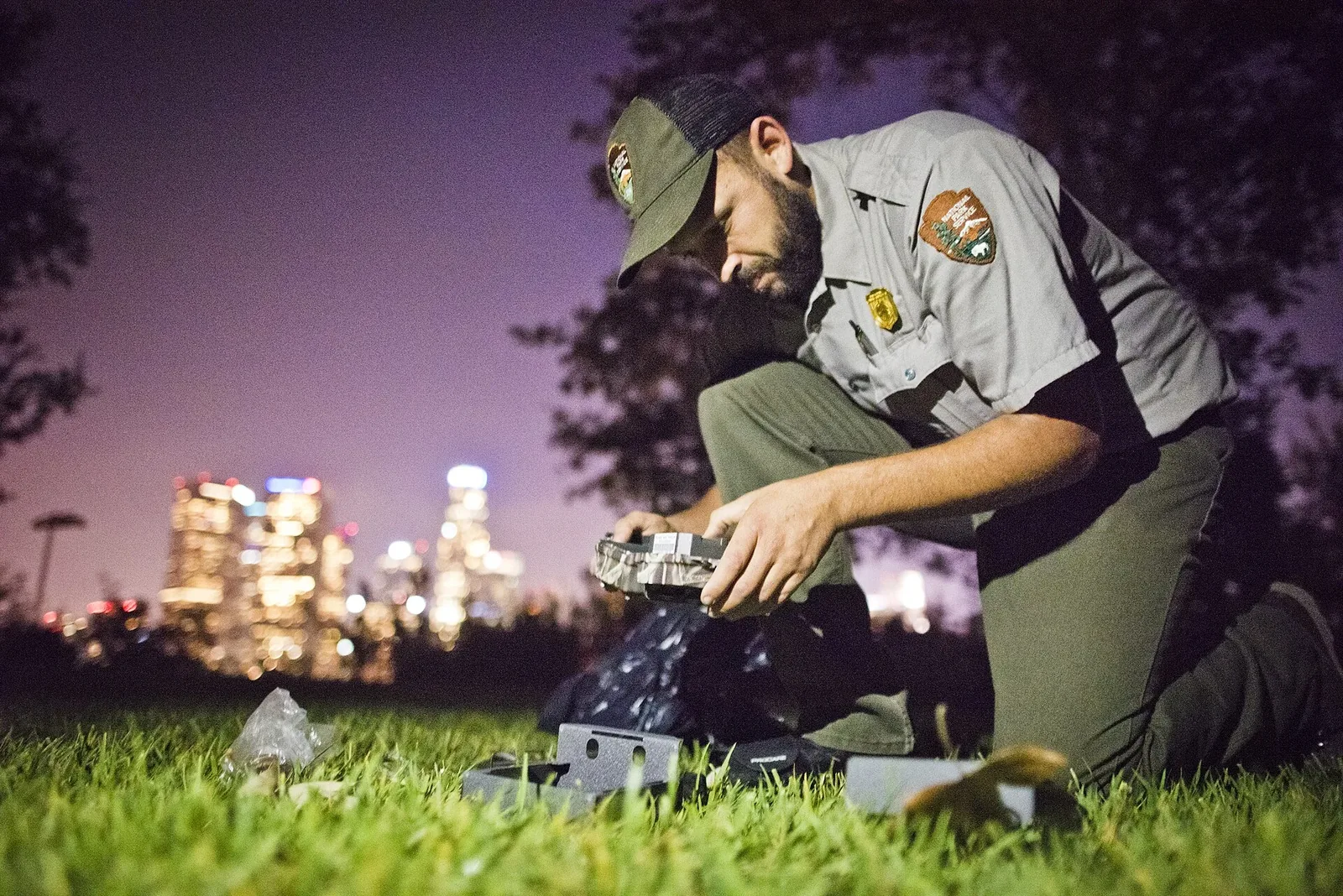
A camera aimed at a trail is likely to detect animals that use trails more often than those that move through dense vegetation. Height, angle, bait, trigger speed, and distance from cover all influence records. For population monitoring, sites should be selected to match species behavior and study goals. The British Ecological Society's applied research resources describe how design affects detection rates and precision. A camera network should be distributed across meaningful habitat and deployed for a defined period. Comparing two surveys with different placement can create an apparent trend that is really a change in method.
Effort and downtime belong in the dataset
Cameras fail, batteries run out, lenses become blocked, and memory cards fill. Each period of downtime reduces sampling effort and can bias comparisons if it is not recorded. Researchers should document installation and retrieval dates, functioning days, settings, and any maintenance. Detection rates are often expressed relative to effort for this reason. A camera that produced few images may have sampled fewer nights than another. Transparent effort data allow analysts to model the observation process and help other teams reproduce the work. Silent exclusion of failures can make a survey look more complete than it was.
From detections to occupancy or abundance
Repeated detections can help estimate whether a species uses a site, while capture–recapture methods may estimate abundance when individuals can be identified and the design supports that analysis. These are different statistical questions. A species without distinctive markings may require another method, such as genetic sampling or spatial models that account for detection. Occupancy models can estimate probability of presence while recognizing that an animal may be present but not detected. Each model depends on assumptions that should be stated. A pile of photographs is not automatically a census, even when the images appear to show many individuals.
Image classification is an added source of uncertainty
People or machine-learning systems may classify the images, but both can make mistakes. False triggers from vegetation, partial views, juveniles, or similar-looking species can complicate labels. A review workflow can flag uncertain records, preserve original images, and record who made the decision. Automated classification may save time but should be validated against a sample of images from the actual region and camera settings. If an analysis uses individual identification, the criteria and confidence should be documented. The final data should protect sensitive locations and avoid publishing information that could expose rare species to disturbance or poaching.
Cameras can reveal behavior and human activity
Images may document feeding, travel, interactions, and the timing of activity, but cameras also record people and livestock. That creates privacy and safety responsibilities. Researchers should consider who can access the image archive, how long records are kept, and whether faces or identifying details need to be protected. A camera used for conservation can become surveillance if its purpose and governance are unclear. Community consultation is especially important where equipment is placed near settlements or customary land. The method is more credible when people know why cameras are present and how the data will be used.
Design the study around a repeatable decision
Before deployment, define whether the project will map distribution, compare habitat use, estimate density, or monitor a management outcome. Each goal requires a different layout and analysis. Clustered and rotating designs can sometimes improve precision or use limited cameras efficiently, but they must be matched to species movement and study-area constraints. After the survey, publish effort, model assumptions, uncertainty, and the limits of the inference. A camera trap is a field instrument, not a neutral witness. Its strongest contribution comes when thoughtful placement turns images into a repeatable evidence stream.
A camera-trap dataset should preserve metadata on date, location precision, settings, and effort while controlling access to sensitive records. Data sharing can support collaboration, but exact locations may create risks for species or people. Researchers should set access rules before deployment and explain how images will be retained.