Choose binoculars for the way you will actually use them: weight, grip, eye relief, close focus, weather sealing, and a comfortable field of view all matter. Magnification is only one part of the experience; stronger magnification can make hand shake more obvious and narrow the area visible at once.
Before a long outing, set the interpupillary distance and diopter correction at home, then practise focusing on a stationary subject. Keep lenses capped and use a blower or clean cloth rather than clothing. A spotting scope can help with distant stationary subjects, but it is bulky and never justifies approaching wildlife or leaving a safe trail.
Choose optics for the way you actually observe
Binoculars are a tool for gathering detail while keeping distance, not a contest in magnification. Before comparing models, think about where you observe, how long you carry them, and whether you need a wide field to follow moving birds or steadier detail on distant cliffs. A comfortable instrument that you can use quickly may be more useful than a larger one that stays in the bag. Try the focus wheel, hinge tension, and eyecups if possible. Weight matters on a long walk, while tripod compatibility may matter for a stationary seawatch or prolonged landscape scan.
Magnification and field of view trade places
Higher magnification can make a distant subject appear larger, but it also narrows the field of view and magnifies hand movement. For many walkers, a moderate magnification is easier to hold steadily and makes it simpler to find a bird quickly. A wide field helps when tracking movement through branches or scanning a flock. If you need more magnification, a spotting scope on a stable support may be appropriate, but it takes longer to aim and is less convenient for a moving subject. The best choice depends on habitat and activity rather than a universal ranking of numbers.
Light transmission is more than a lens label
Objective lens diameter, coatings, glass quality, exit pupil, and your own eyes all influence what you see in dim conditions. A larger objective may gather more light but adds size and weight. Marketing terms are not a substitute for trying an instrument at dawn or dusk, when your normal observing conditions matter most. Check edge sharpness, contrast, color fringing, and how quickly your eyes can settle into the view. Keep expectations realistic: binoculars cannot reveal detail that the atmosphere, distance, or low light has erased. A comfortable view encourages longer, more careful observation.
Fit and handling prevent fatigue
Interpupillary distance should be adjusted so the two circular images merge naturally. Eyecups need to suit whether you wear glasses, and the instrument should focus at distances you are likely to use. A neck strap or harness can distribute weight; lens caps and a padded case protect the optics between observations. Try the binoculars while standing and while seated, not only at a store counter. If the view shakes, use a tree, railing, or your own body position as support without stepping off a path. Comfort is part of usability, especially on an all-day field trip.
Practice finding the subject
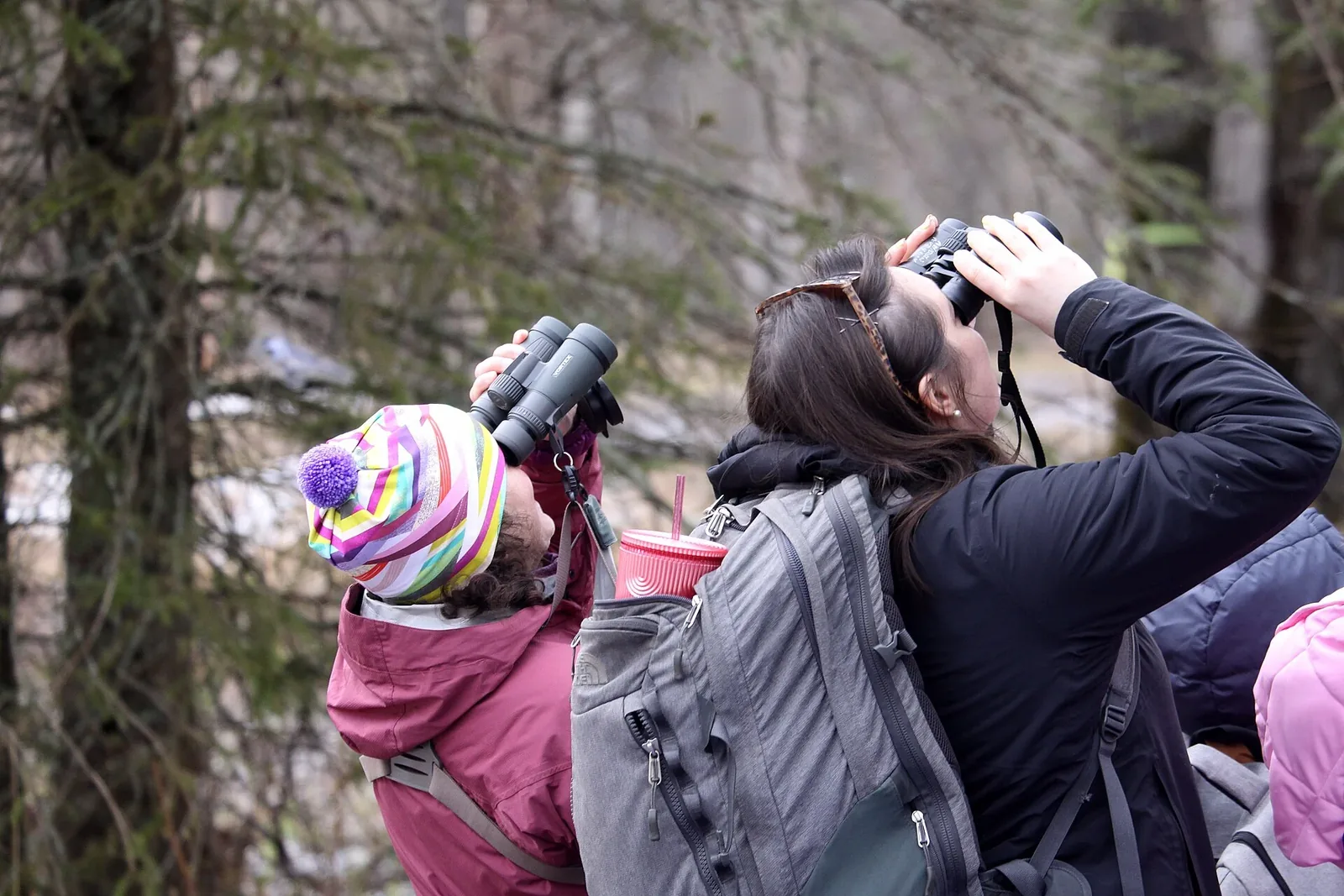
Many beginners struggle because they look through the binoculars before locating the animal. Start with your eyes, choose a fixed landmark near the subject, and raise the binoculars without shifting your gaze. Then adjust focus slowly. On a moving bird, follow with your head and upper body rather than making sharp wrist movements. Practice on stationary signs or distant branches before a field trip. This skill can reduce the time you spend waving optics across a habitat and helps avoid repeated approaches to get a better view. Good technique is inexpensive and often more valuable than an upgrade.
Care for optics in the field
Dust, salt spray, rain, and condensation can damage or obscure lenses. Keep optics in a case when not in use, use a blower or soft brush before wiping, and carry a clean lens cloth. Avoid rubbing grit into the coating or breathing on a lens when a manufacturer recommends a different cleaning method. Sudden changes from a cold exterior to a warm vehicle can cause fogging; allowing equipment to acclimate gradually can help. Check that eyecups and focus controls move smoothly before a trip. NPS wildlife-viewing advice also stresses preparing for the location itself, including terrain and weather, not just the equipment.
The ethical value of a longer view
Optics support responsible watching only when the observer also gives animals room. Use a scope or telephoto lens to stay within site rules, and move back if an animal changes behavior. Do not use magnification to justify finding hidden nests or following a resting animal. The right equipment can improve detail while reducing pressure, but it cannot make every observation appropriate. Consider the whole outing: route, weather, other visitors, and the sensitivity of the species. A small, well-fitting pair of binoculars and a patient observer often produce a more rewarding experience than the strongest instrument pointed from too close.
Try equipment in person when possible, since eyecup design and balance differ between models. A comfortable instrument that you can hold steadily is often more useful than one with the largest specification. If you wear glasses, confirm eye relief and check whether the full field remains visible.