Coral bleaching describes the loss of symbiotic algae or pigments under stress; it does not mean that every coral has died. Heat stress is a major driver of mass bleaching, and NOAA Coral Reef Watch combines satellite observations with forecasts to identify thermal stress. Local impacts vary with depth, species, water quality, and exposure.
Recovery depends on surviving colonies, recruitment, repeated heat events, and local pressures such as pollution or overfishing. A protected site may improve resilience but cannot prevent marine heatwaves. Reporting should name the location and observation period, distinguish bleaching from mortality, and avoid using a single reef as evidence for all reefs.
Bleaching is a stress response, not a synonym for death
Coral bleaching happens when corals lose some of the symbiotic algae or pigments that give them color, often after heat stress. A bleached coral is under stress but is not necessarily dead. If conditions improve, some corals can recover; prolonged or repeated stress can lead to mortality. The distinction matters because images of pale reefs are often captioned as if every coral has already died. NOAA Coral Reef Watch monitors thermal stress using satellite products and outlooks, helping identify conditions associated with bleaching risk. Those tools describe heat exposure, not the full ecological condition of every reef.
Heat stress accumulates over time
Corals can tolerate a range of temperatures, but exposure above their usual conditions can disrupt the partnership with symbiotic algae. NOAA's heat-stress products summarize how long and how intensely reef areas have experienced conditions associated with bleaching. A single warm day is different from sustained heat. Local water movement, depth, cloud cover, species, and prior stress can influence how a reef responds. Readers should check the product date and geography before repeating a global alert. A current outlook is not a long-term forecast of reef survival, and one reef's response cannot be generalized to all reefs.
Recovery depends on what survives
A reef's recovery can involve surviving colonies, larval supply, recruitment, growth, and the condition of surrounding habitat. The time required varies by species and location. Repeated marine heatwaves can interrupt recovery before young corals mature. Water quality, fishing pressure, disease, and physical damage also influence reef condition. Local protection can reduce some pressures but cannot prevent a marine heatwave. A reef may regain coral cover while species composition or structural complexity remains altered. Monitoring should therefore use several indicators and explain whether it measures live coral, species diversity, fish communities, or another outcome.
Reefs are built by relationships
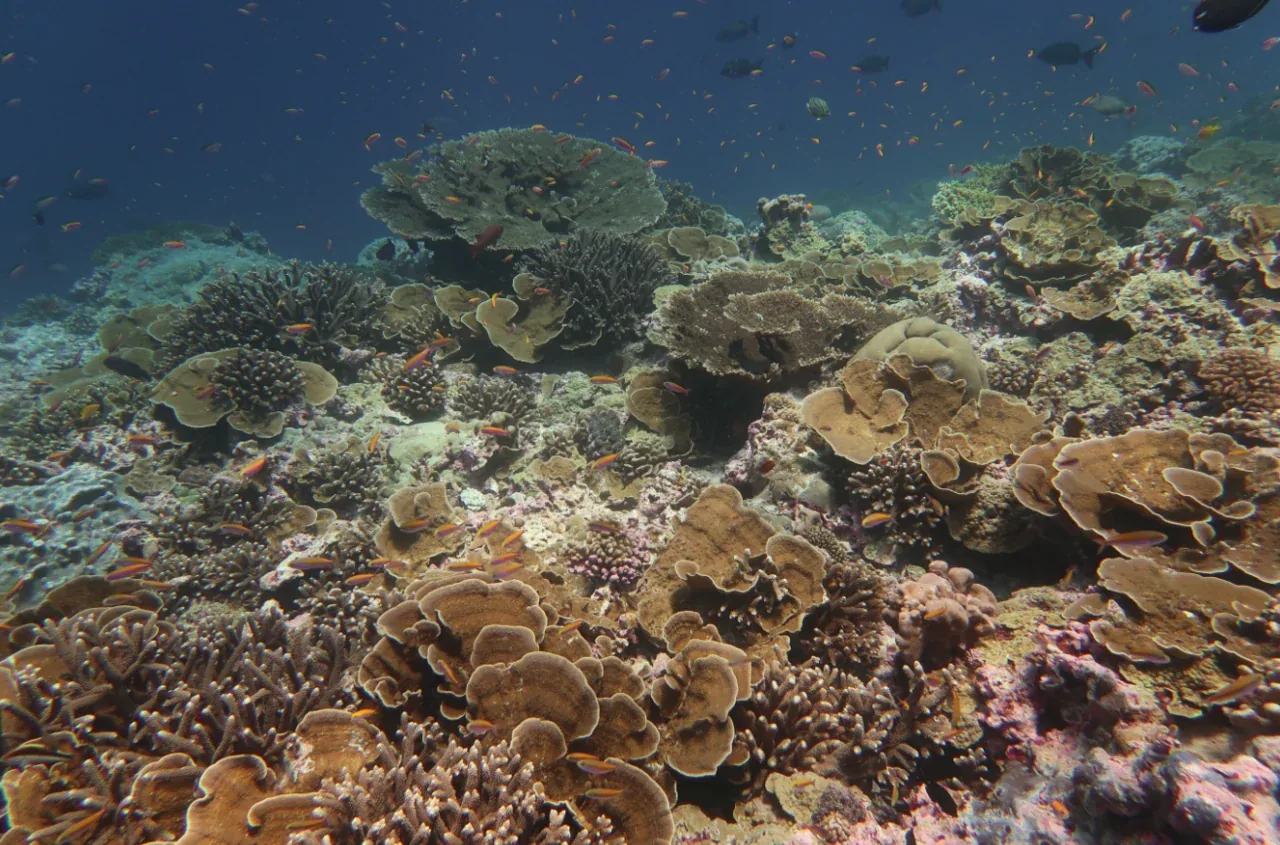
Coral reefs support fish, invertebrates, algae, and microorganisms in a three-dimensional habitat. Herbivores can help keep algae from overgrowing coral, while predators and prey structure the food web. When one part changes, effects can spread through the system. A healthy-looking patch in a photograph may represent only a small part of a reef, and a survey of fish abundance may not tell us about coral recruitment. Researchers combine transects, remote sensing, water-quality data, and long-term observations to track these relationships. A useful article explains which parts of the reef were measured and which remain uncertain.
Restoration has to match the site
Coral gardening, larval propagation, and outplanting can help restore particular areas, but they are not replacements for addressing local stressors. A restoration project should define its goal, species, selection criteria, and monitoring period. Survival of transplanted fragments is one metric; reproduction and reef-level function are broader outcomes. Methods that work in one location may not transfer to another with different waves, heat, or water quality. Claims of a 'restored reef' should state what was restored and how success was measured. NOAA sanctuary resources and local management plans can help readers distinguish general ecology from a specific restoration result.
Visitors can reduce local pressure
Divers and boaters can avoid touching corals, standing on reef structure, or anchoring on sensitive habitat. Mooring buoys and designated access can reduce physical damage where available. Tour operators can explain the difference between a bleached coral and a dead colony and discourage wildlife feeding. These practices do not solve heat stress, but they can reduce local impacts that make recovery harder. Visitors should follow rules set by the marine park or sanctuary, because conditions and restrictions vary. Small actions are most useful when they are part of site management and not presented as a substitute for larger climate and water-quality measures.
Tell the reef story with dated evidence
A clear report names the reef, observation period, survey method, and indicators. It distinguishes satellite heat stress from in-water bleaching surveys and separates bleaching from confirmed mortality. If a number describes the share of global reef area under stress, the source and calculation date belong beside it. NOAA Coral Reef Watch provides monitoring products that can be checked over time; local agencies and researchers provide context about ecological outcomes. Coral recovery is neither instant nor uniform. The most accurate story can hold two facts together: reefs face serious heat-related risks, and local ecological conditions determine how much damage a particular community suffers.
Bleaching response can differ among coral species, colonies, and depths. Some corals recover after stress subsides, while prolonged heat may cause mortality and affect reproduction. Monitoring needs to revisit the same locations and distinguish bleaching prevalence from later survival and recruitment.