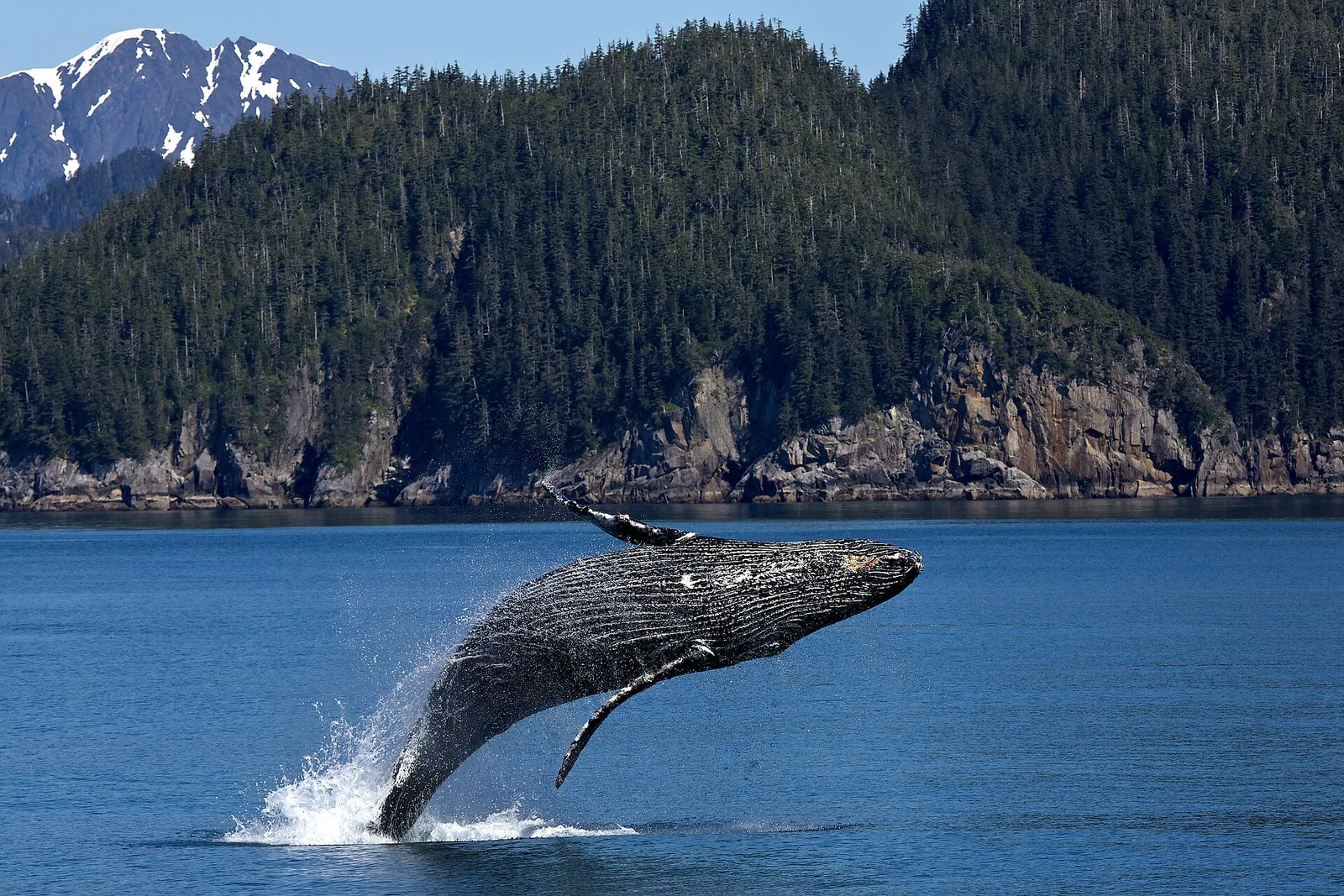
Whales and dolphins use coastal waters for feeding, travel, and social behaviour, but the species present depend on the region and season. From a boat or shore, observers should follow local viewing rules, avoid blocking an animal's direction of travel, and never pursue a group to extend an encounter.
Record the platform, distance estimate, sea state, direction, and behaviour, and report entanglement or distress to the responsible wildlife authority. A photograph may help identify an individual or species, but it should not be collected by approaching the animal. NOAA's guidelines apply to U.S. waters; other jurisdictions have their own distances and procedures.
A coastal sighting is only one frame of a migration
Whales, dolphins, and porpoises move through coastal waters in ways that can be difficult to observe from shore. A sighting may show an animal travelling, feeding, resting, or simply surfacing to breathe; it rarely reveals the full purpose of the movement. Species, season, tide, prey distribution, and sea conditions all shape what an observer sees. NOAA's marine life viewing guidance emphasizes respectful distance and notes that regulations differ by species and region. Readers should therefore avoid treating one coastal encounter as evidence that a population has moved into or out of an area.
Acoustics add a second view
Many cetaceans use sound for communication and orientation, and researchers can study calls with hydrophones. An acoustic detection may reveal that a species was present even when visibility is poor, but it does not always identify an individual or show how many animals were nearby. Background noise from ships, weather, and other animals can complicate interpretation. Analysts need to describe recording locations, equipment, time periods, and classification confidence. Combining acoustics with visual surveys, photo identification, and satellite tracking can answer different questions, but methods should be aligned before their results are treated as one population trend.
Coastal habitat is a connected system
Nearshore waters include estuaries, bays, seagrass beds, reefs, and migration corridors that may support different life stages. Prey fish can gather in shallow water, while deep channels offer routes through a coastline. The value of a site depends on local species and conditions; the phrase 'important habitat' should be tied to a specific ecological function. NOAA sanctuary resources provide context about marine wildlife viewing and habitat, but local monitoring is needed to establish what a particular bay or headland means for a cetacean population. Water quality and vessel activity can affect more than the animal seen at the surface.
Boats can change behavior
A vessel that approaches, follows, encircles, or separates animals can interrupt feeding and travel. NOAA advises people to avoid close approach and publishes distances and rules that vary by species and location. In U.S. waters, the general recommendations include at least 100 yards for large whales, with stricter distances for some species and regions; those figures should not be applied as a universal rule worldwide. Operators should check local regulations before a trip, slow down near marine mammals, and avoid chasing animals for photographs. A sighting becomes a conservation problem when the method of watching changes the behavior being observed.
What a responsible tour can offer
A well-run wildlife tour can explain how to identify species, how to read behavior, and why distance matters. It should train operators, limit time near groups where local rules require it, and avoid promising a guaranteed close encounter. The absence of a sighting can be an honest outcome in a dynamic marine environment. Tour reports should distinguish observed species from uncertain identifications and avoid advertising a route as a reliable way to find a rare animal. Tourism benefits should also be described carefully: revenue may support local livelihoods, but a direct conservation contribution needs transparent evidence.
The challenge of interpreting a trend
More whale reports may reflect more observers, more boats, improved apps, or a genuine change in distribution. A trend analysis needs consistent effort or a model that accounts for changing observer coverage. Photo-identification catalogues can help track individuals in some species, but not every animal has markings that can be matched. Acoustic detections also depend on equipment and ambient noise. A careful article names the method and study area, and separates the presence of an animal from abundance. This precision makes a coastal story more informative than an unsupported claim that a species is 'returning' or 'disappearing.'
Observe in a way that leaves the animal in control
From land, use binoculars or a long lens and let the animal choose its direction. From a vessel, follow local guidelines and give animals a clear route. Do not swim toward, feed, touch, or attempt to elicit a response from wild cetaceans. NOAA's marine mammal viewing page explains that interacting with animals outside permitted research should not be attempted. Report an animal in distress to an authorised stranding network rather than trying to handle it. Ethical viewing preserves both the animal's options and the value of the observation for future research.
Whales and dolphins may alter their movement or communication in response to vessels, especially when boats crowd a group. Operators should follow local speed, approach, and viewing-distance rules. If the group changes direction or surfaces erratically, increase distance and leave a clear path for animals to move.