Tracks are clues about an animal's passage, not a complete census. Note the substrate, track dimensions, stride, direction, freshness, and nearby habitat before trying to identify a maker. Rain, thaw, wind, and overlapping prints can alter shape; a photograph with a scale is more useful than a confident guess made from memory.
Avoid following tracks into nests, dens, private land, or closed habitat. If several species share similar prints, record the identification as uncertain and seek expert review. Track surveys become stronger when observers use repeatable routes and record effort, including stretches where no signs were found.
Tracks preserve a brief record of movement
A print in mud, snow, or sand is evidence that something passed through a place, but it rarely tells the whole story by itself. The substrate records pressure and movement for a short period, then rain, wind, melting, drying, or later footprints alter the shape. Begin with a wide view of the trail and its setting before focusing on one print. Note the habitat, surface, weather, and nearby signs. This context may help distinguish a trackway from an isolated mark made by a branch, water, or a person.
Measure before trying to identify
Place a scale beside a clear print without stepping into or touching the trackway, and photograph it from directly above when safe. Record length, width, stride, and the spacing between repeated groups of prints. Note whether the track appears to show toes, claws, a heel, or a dragging tail, but avoid treating any single feature as conclusive. Size varies with age, substrate, and how deeply an animal pressed into the ground. A ruler and a cautious description allow later comparison; a guessed species name written from memory does not.
Gait can be more informative than one footprint
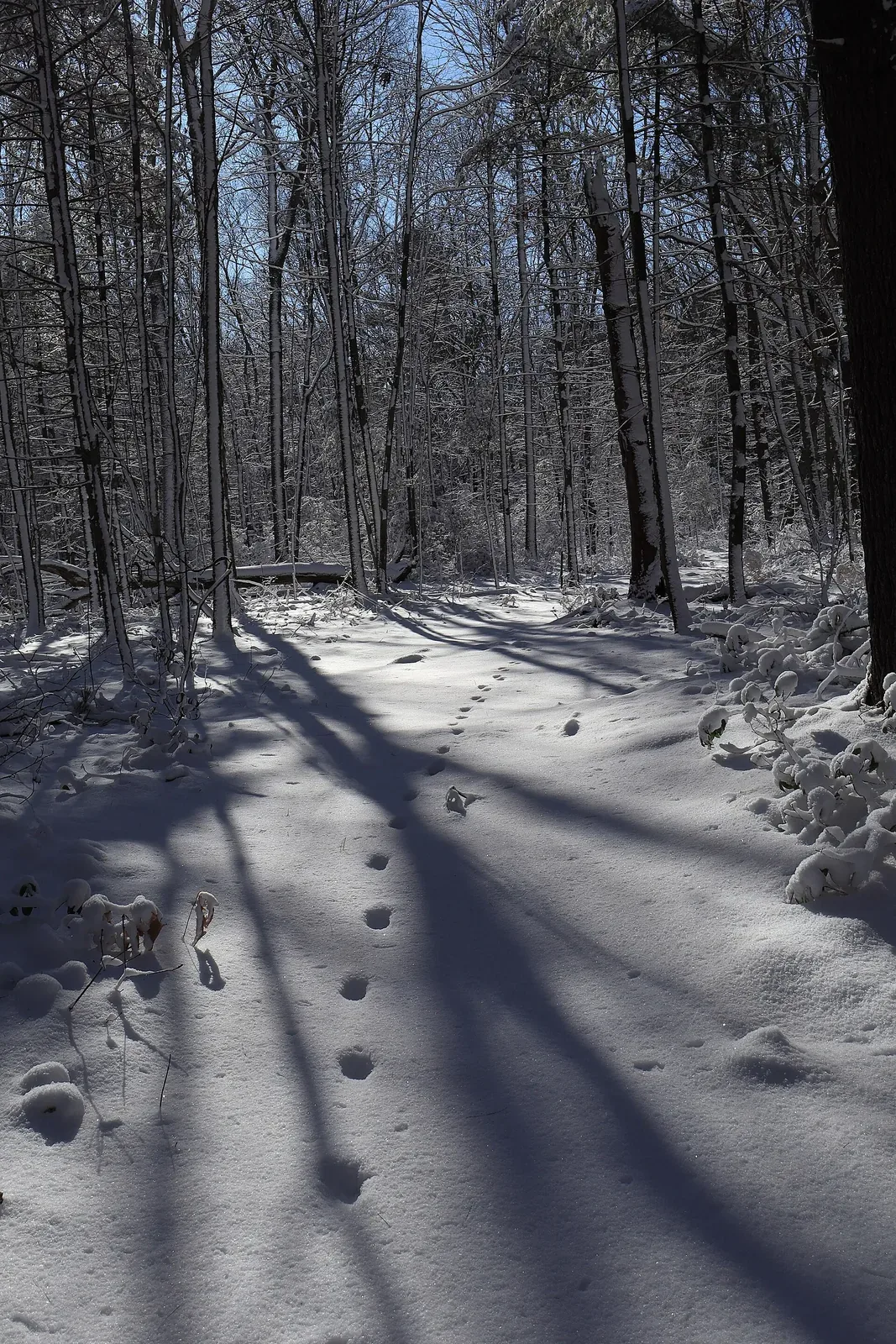
The arrangement of prints may reveal whether an animal walked, bounded, trotted, or moved in a particular sequence. Some species place feet in overlapping paths, while others leave paired or grouped impressions. Soft snow can exaggerate toe spread, and a crusted surface can hide fine details. Compare several consecutive steps and look for a consistent pattern before consulting a regional guide. Tracks should be read in the landscape where they occur: a likely mammal on a beach may be different from a similar-sized animal in forest snow.
Substrate and weather change the evidence
Wet mud can slump after a print forms; dry sand can collapse at the edges; fresh snow may soften under sun and wind. A trackway that looks crisp is not necessarily recent because temperature and shade can preserve impressions. Describe freshness as an estimate and list the conditions behind it. If water, thaw, or foot traffic is changing the site, make that limitation clear. Comparing prints across substrates is useful for learning, but a field guide illustration is not a scale reference unless the guide states how it was prepared.
Combine tracks with other independent signs
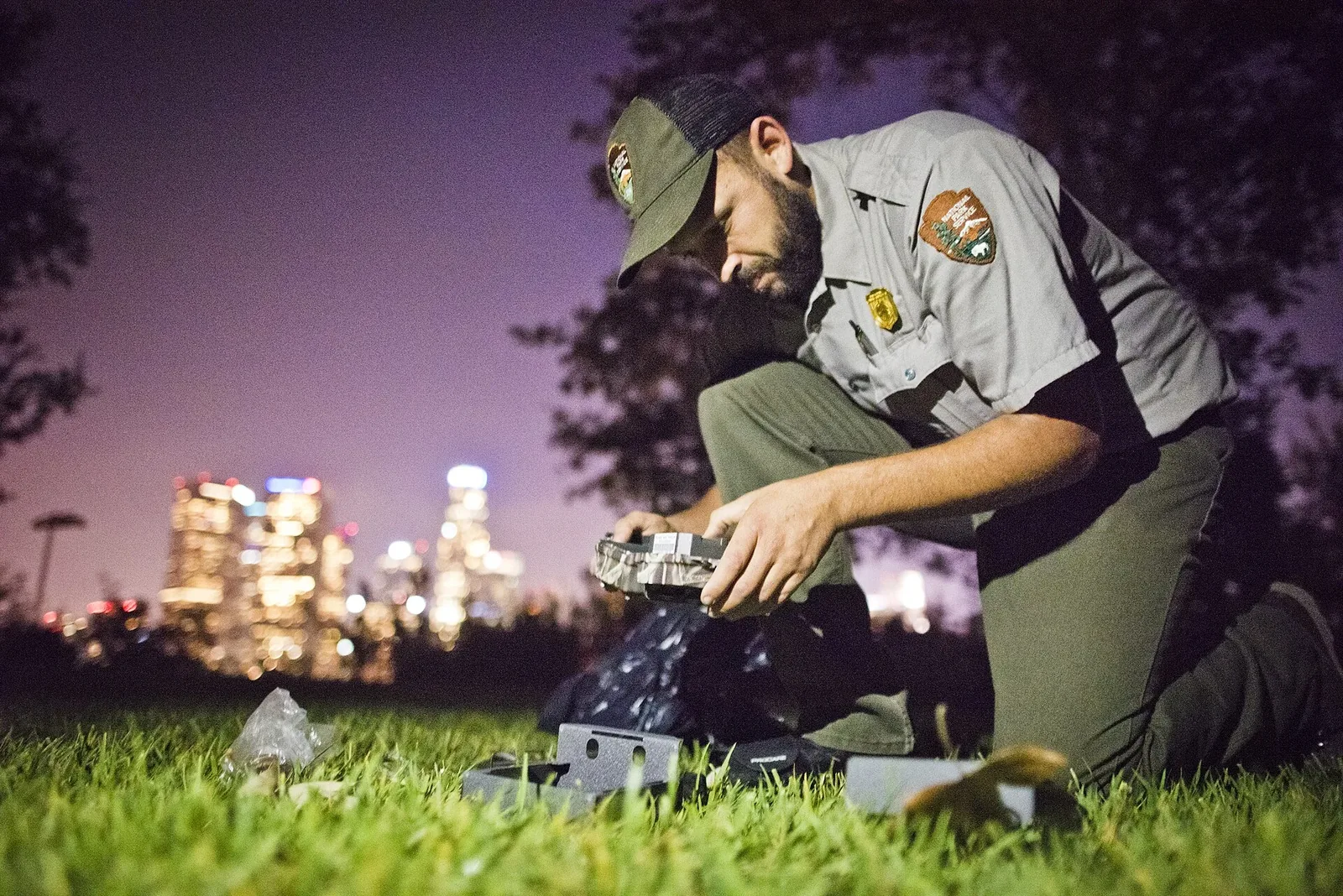
Feeding marks, scat, hair, feathers, calls, camera-trap images, or repeated tracks can add context, but they need not all point to the same individual. Look for signs that are genuinely independent rather than counting several traces from one passage as separate animals. A camera can confirm which species used a trail, while track dimensions may help describe movement or season. If evidence conflicts, preserve that conflict in the notes. Field interpretation is stronger when a reader can see why an identification was considered and what would be needed to confirm it.
Follow signs without following an animal
A trackway can lead toward a den, nest, resting place, or sensitive habitat. Do not follow it into closed land, private property, or a place where your presence could cause disturbance. Stay on permitted routes, avoid touching signs, and do not use food or scent to create tracks for a photograph. Park guidance and seasonal closures take precedence over general field advice. The aim is to understand evidence left behind, not to force a closer encounter with the animal that made it.
Make the record useful to someone else
A concise field log can include date, approximate location, observer effort, surface, dimensions, stride, weather, photographs, and a confidence level for the identification. Keep sensitive coordinates private when sharing could expose wildlife. A local naturalist group, park interpreter, or qualified tracker may help review an uncertain pattern, but label that review accurately rather than calling it scientific confirmation. Repeated surveys along the same route can document when signs appear and disappear. That record is more useful than a dramatic claim about an animal inferred from one ambiguous footprint.
Fresh tracks can soften quickly, while snow, mud, and sand preserve different details. Photograph the whole trackway as well as an individual print, include a scale, and avoid placing the scale over delicate evidence. Record nearby tracks and substrate conditions because these can explain apparent differences in shape.
A track interpretation should remain provisional when the print is incomplete or disturbed. Consulting a local field guide or experienced tracker can help, but the final record should preserve uncertainty. Do not approach a den or follow a trail into unsafe terrain merely to confirm a suspected species.