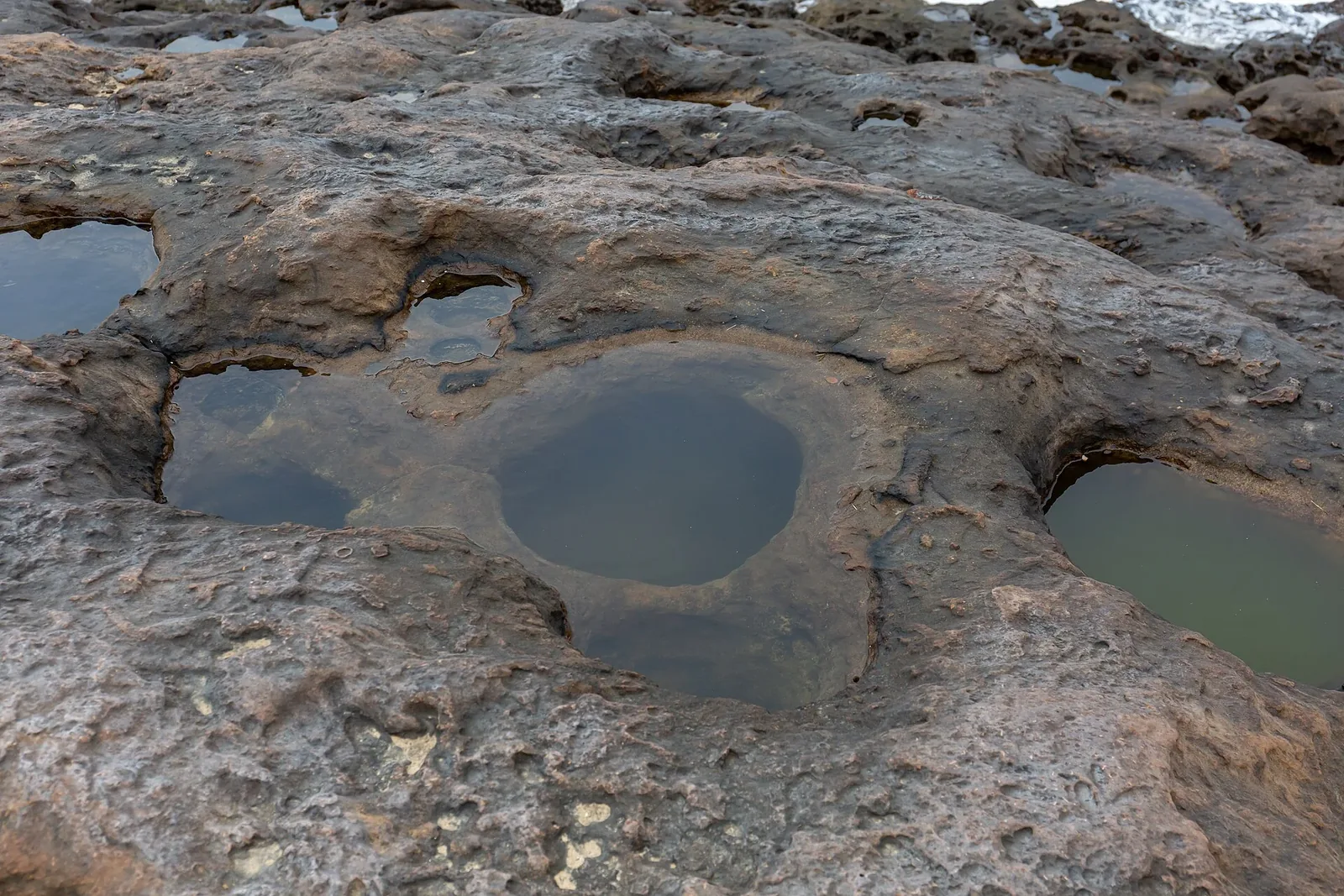
A tide pool is a small marine habitat left exposed as the tide falls. Organisms there experience changing temperature, oxygen, salinity, wave exposure, and predator access over a short period. These demanding conditions help explain why a pool can contain a surprisingly specialised community in a very small space.
Observe without lifting animals, overturning rocks, or removing shells; replace nothing because it should not have been disturbed. Stay off fragile algal mats and follow protected-area rules. NOAA's page describes tide pools in general, while its Florida Keys example shows how intertidal flats connect with mangroves, seagrass, and reef habitat in that sanctuary.
A tide pool is an intertidal habitat under pressure
Tide pools are pockets of seawater left behind as the tide retreats from a rocky shore. Their residents experience rapidly changing temperature, oxygen, salinity, wave exposure, and access to predators. A pool may appear like a small aquarium, but its organisms are coping with harsh conditions between tides. NOAA describes tide pools as part of the intertidal zone and emphasizes leaving plants and animals undisturbed. This boundary between sea and land is a useful place to observe adaptation, but it is also fragile: small actions can dislodge organisms or change the shelter that protects them.
Each pool has its own microclimate
A pool's depth, orientation, shade, wave exposure, and connection to the sea influence its conditions. A deep shaded pool may stay cooler than a shallow basin in direct sun. Salinity can rise as water evaporates, while rainfall can dilute it. Organisms living high on the shore must tolerate longer periods without fresh seawater than those lower on the rocks. A species seen in one pool may be absent from a nearby pool with a different exposure. Field notes that include tide height, weather, and pool position make observations more useful than a species list alone.
Zonation is shaped by tolerance
Different algae and animals occupy different parts of the shore because they tolerate exposure and wave action differently. Barnacles and mussels may attach to hard surfaces; anemones and small crustaceans use crevices or pools. These patterns are not perfect bands, because local shade, rock shape, and competition create variation. A single visit can reveal a snapshot but not seasonal change. Researchers compare transects or revisit the same locations under similar conditions. Visitors should avoid pulling organisms off rock to identify them; close observation or a field guide can often answer the question without damage.
Turn rocks carefully—or leave them alone
The underside of a rock can provide moist shelter for small invertebrates, but lifting it can expose them to heat and predators. If local guidance permits turning a loose rock, return it exactly as found and do not disturb attached animals. Never pry off barnacles, algae, or shellfish. NOAA recommends leaving plants and animals alone and notes that collecting intertidal species may be illegal in many places. Tide-pool rules vary among protected areas, so check local regulations before visiting. The safest observation is often made without moving anything.
Tide timing and personal safety matter
Visit near a falling or low tide when pools are exposed, but plan a route that remains safe as the water returns. Waves can wash over apparently calm platforms, and algae-covered rock is slippery. Wear footwear with grip, keep away from cliff edges, and do not enter a pool if doing so requires stepping on sensitive organisms. Local tide tables and coastal advisories should guide the visit. These are general precautions, not a substitute for site-specific safety information. A good observation ends with enough time and a clear route to leave before the tide changes.
Human pressure accumulates in popular pools
Repeated trampling, collecting, litter, and crowding can damage intertidal habitat. A popular pool may receive many visitors in a short period, even if each person causes little disturbance. Staying on bare rock where safe, keeping groups small, packing out rubbish, and avoiding flash or handling can reduce impact. Protected areas may impose access restrictions during breeding or restoration periods. If an organism appears stranded or injured, do not move it unless an authorised local programme instructs you to do so. The tide pool is not a specimen cabinet; it is a living community connected to the surrounding shore.
Use a tide-pool visit as a repeatable observation
Choose a small area and record species, approximate counts, pool conditions, tide, time, and weather. Revisit only if doing so will not increase pressure on the site. Photographs can support later identification, but avoid sharing precise locations of especially sensitive features. Compare observations cautiously because seasons and tides change what is visible. A single empty pool does not prove that organisms have disappeared; they may be hidden or the conditions may be unsuitable for detection. Patient, low-impact observation can help people understand how life persists at the boundary between land and sea.
The intertidal zone is a gradient, so exposure time and wave action differ across a single rocky shore. Look closely without touching and allow other visitors room. A pool can warm quickly in sun, and organisms may be adapted to a narrow range of conditions.